Wakaranai Field Guide
a collection of field notes, a slow look at Hokkaido, and the people and places that make it special.
Field Notes 03.

The first moment, when I really thought wow, this is the place, was when I was sitting on the ferry going to Rishiri Island.
Yes, you might be going Riley, I am sure you have had wow moments before then, and yes, I had been wowed, don't get me wrong, but something about this ferry hit so right.
We had a mission to go hike the volcano of Rishiri Island. We had been planning it with our friend Alex, and this was on the list. It is way up north in Hokkaido, and was way out of the way of everything that was on our list, but this was there, and this is what we were doing.
We met Alex in the ferry parking lot, we had already been out for a week, and he had just flown out the night before. He got a good run at it, and he made it in time to catch the last ferry to Rishiri for the night.
Okay, if you have been on a Japanese ferry, you might be now going, so Riley, what's the big deal, yeah they are cool and all, but really, you are going to dedicate a whole Wakaranai Field Note to the Rishiri Ferry?
So we hopped on the ferry right, and this is just a short one, only about an hour and a half. No meals, no onsen onboard (some ferry's do be having that), but just taking my shoes off, and sitting on the comfy floor, and lounging out. Like you got to be kidding me. I have been on my fair share of ferries in my life, growing up around the PNW, but nothing comes close to the joy of pulling your shoes off and just straight chilling. We played cards, and munched hi chews, and just stoked, and caught up on life. For me, that is one of those moments where things all just clicked into place, and I said wow.
Now the island, was sick, the volcano, is definitely something you should do. You can camp right at the trailhead, 10/10 would recommend, and it is something I will be talking about in a later field note, but this field note, is about the ferry, so we will leave it here.
I guess if I could end with anything, without being too terribly cliche, sometimes the mode of transportation, is more important than where that transportation is taking you.
- Riley
Field Notes 02.
In the same way that my brain doesn't function in a linear fashion, I don't think Hokkaido does either.
There is definitely a flow to things here, but it will wrestle with you if you try to impose on it.
This is a story from our first days in Hokkaido. A misunderstanding, a bit of frustration, and things working out how they should.
We came to Hokkaido with the plan of checking out a ski lodge in Tomamu that we were interested in buying.
We had set up a car rental before arriving, and on our second day, we went to pick it up so we could head out that same day.
I knew I needed an International Driving Permit.
But having been living in Germany, not my home country, I had gotten one issued there.
Unknown to me, that version isn't accepted in Japan.
So there we were at the counter, being told we didn't actually have a car to rent.
Which put our whole plan in a bit of a hole.
Denise and I regrouped.
Sat for a bit.
Thought it through.
Then made the only move that made sense.
We got the Hokkaido-wide 7-day train pass, and ran to catch a train to Tomamu.
Got picked up by the realtor.
Saw the lodge.
Got dropped back at the station.
And carried on.
In a strange way, it was a bit of a blessing.
We had come to Hokkaido with camping gear and light packs, planning to camp each night.
Without a car, we were suddenly limited to places within walking distance of a station or public transport.
It narrowed things.
But it also changed how we started interacting with the place.
Our next stop was Mukawa.
A small coastal town.
A friend we had met at Shambhala in British Columbia had told us about a small festival there.
That was enough reason to go.
Mukawa isn't a place that sees many western tourists.
More or less, it's pretty indescript.
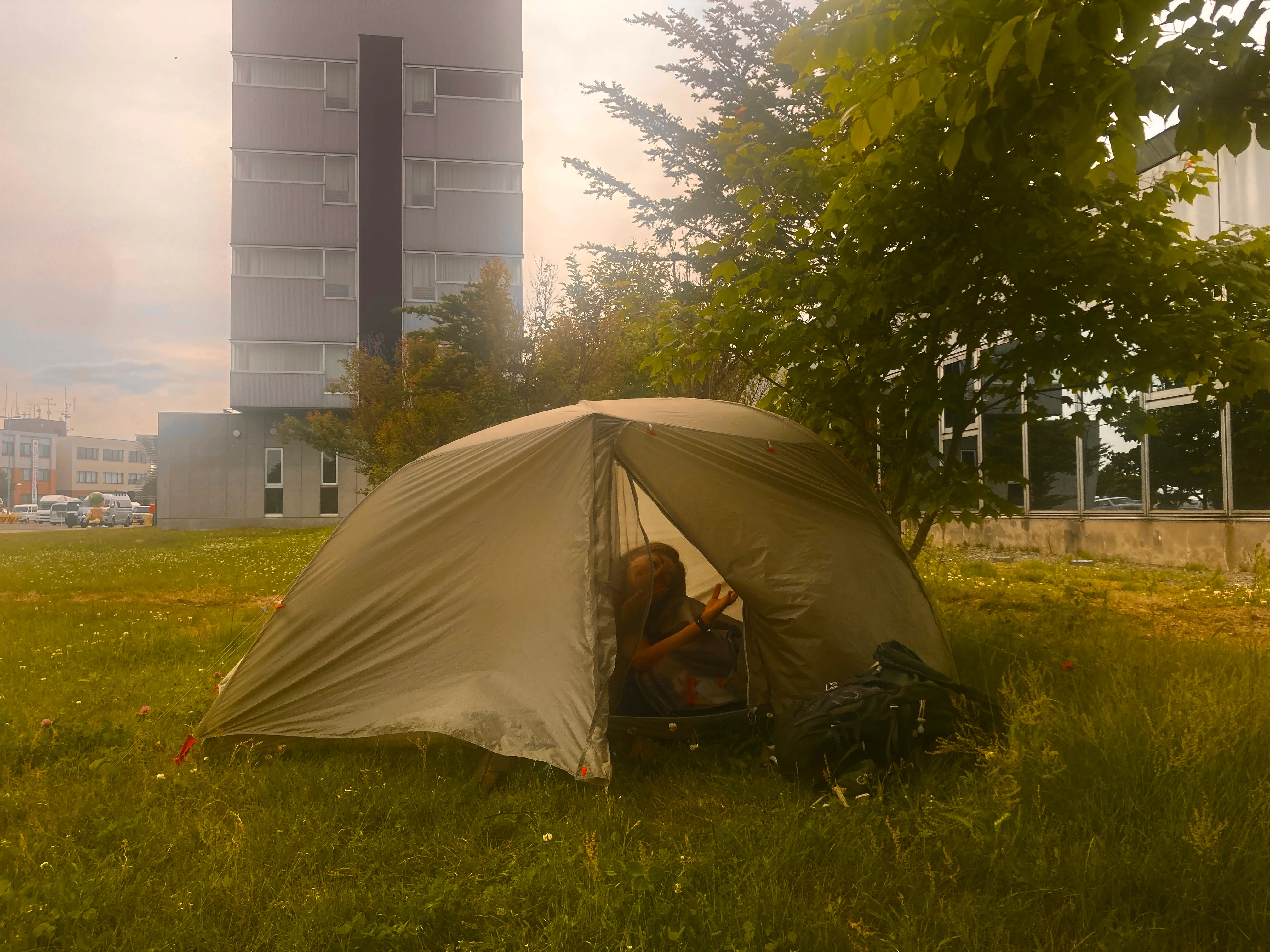
We ended that day on the lawn of a roadside stop, next to an onsen.
Tent pitched.
Heading to sleep after a soak that washed off the sweat and a bit of the stress from the day.
This was our first onsen in Hokkaido, and my first in Japan in about 8 years.
They were incredibly friendly.
I asked about tattoos, showed the one on my arm.
Big smile.
Okay sign.
"Daijoubu."
Inside, I was taking my time a bit too much.
The old onsen woman was there, checking the water, making sure everything was in order, and, in this case, making sure I knew what I was doing.
She stood there, watching, waiting.
Eventually it was clear she wasn't going anywhere.
She kept giggling and telling me to wash my hair.
All things considered, a really nice onsen, in a good corner of the world.
One I'm keen to revisit.
Somewhere in all of this, it felt like a reminder.
That we needed to let go a bit.
And move with what Hokkaido was giving us.
And as soon as we did, we were already ending up in interesting places.
- Riley
Field Notes 01.
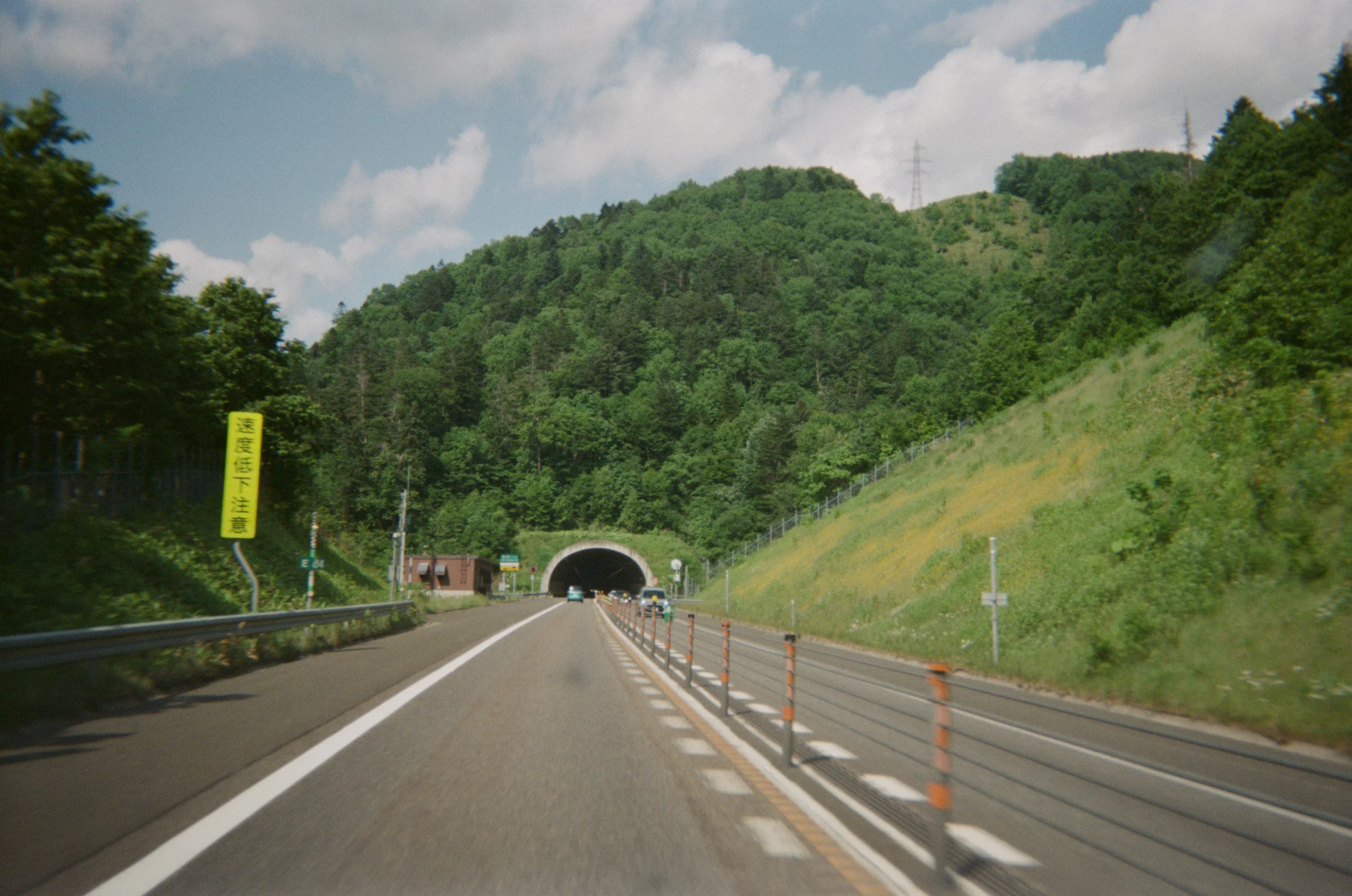
Welcome to a project I've been thinking about since the moment I first set foot in Hokkaido.
I don't claim to have lived here forever, or to know everything.
This is just what I've seen so far.
The conversations I've had, and the places I've had them.
There is a version of Hokkaido, and Japan more broadly, that you already know.
Deep pow.
Single seat chairlifts.
Vending machines.
Cities.
Shrines.
The one photo everyone takes of Yotei.
It's not wrong.
But most of what I've come to care about here sits somewhere else.
A side of things that doesn't run numbers on Instagram.
A different way of engaging with a place.
Not a checklist to move through,
but something slower.
This will be a mix of stories, people, places, food,
and ways of moving through the landscape.
A way of paying attention
to how people relate to the land,
to each other,
and to themselves.
I am looking forward to see where this goes, and I am excited to have you along for the journey, no matter when that may be.
- Riley